
Wedding PlannerKolkata
Every ritual, in order.Every moment, yours.
Weddings of every tradition, planned end-to-end in Kolkata — so your family can be guests at their own celebration.
Why We Do This
A wedding is one day. The memory of it lasts the rest of your life.
The Idea
So you should be in it — not running it from the side of the room.
How We Work
We hold every thread. The vendors, the timeline, the thousand small things. You hold the moments.
Wedding Philosophy
The wedding you want. Not the wedding everyone has.
Most weddings in Kolkata follow a template. Same vendors. Same flow. Same décor everyone has seen at the last three weddings they attended. The result is technically a wedding — but rarely the wedding the family actually wanted.
We start somewhere else. Before we talk vendors, we talk to you. What kind of wedding are you imagining? Loud or intimate? Traditional or modern? Bengali, Marwari, Punjabi, South Indian, Muslim, Christian, inter-community? What did you love at the last wedding you attended? What did you hate?
Then we plan backwards from that.
Purple Crown Events plans weddings of every tradition in Kolkata — Bengali, Marwari, Punjabi, Muslim, South Indian, Christian, Bihari, Jain, and inter-community — end-to-end, with transparent planning fees and one dedicated planning team through every function.
The Wedding Week
Your tradition. In its right order.
No two communities run a wedding the same way — and the order of the rituals is not a detail, it is the wedding. Choose your tradition. This is the week we would build for you.
A Bengali wedding traditionally flows: Aashirbaad → Aiburobhat → Dodhi Mangal → Gaye Holud → the wedding night (Bor Jatri, Shubho Drishti, Mala Bodol, Sampradan, Sindoor Daan) → Bidaay → Bou Bhaat.
Weeks before
Aashirbaad
The elders' blessing. Both families bless the match with dhaan and dúrba — husked rice and grass — and from this moment, the wedding is real.
A day or two before
Aiburobhat
The last meal as an unmarried person — hosted by family, heavy with favourite dishes and heavier with feeling. Intimate, emotional, deeply photographed.
Wedding morning
Dodhi Mangal & Gaye Holud
At dawn, married women feed the couple curd and chiré. Then the turmeric travels from the groom's house to the bride's — and the families turn each other gold.
Wedding evening
Shubho Drishti & Mala Bodol
Carried in on a piri, the bride circles the groom seven times — then the first look, eyes meeting over betel leaves, as garlands change hands three times and the ululation rises.
The auspicious lagna
Sampradan & Sindoor Daan
The giving away at the sacred fire, the saat paak, and the vermilion that makes it final — the heart of the Bengali wedding night.
The day after
Bidaay & Bou Bhaat
The farewell, rice thrown back over her shoulder — and the next day, the groom's family hosts Bou Bhaat: the bride's first meal served as one of their own.
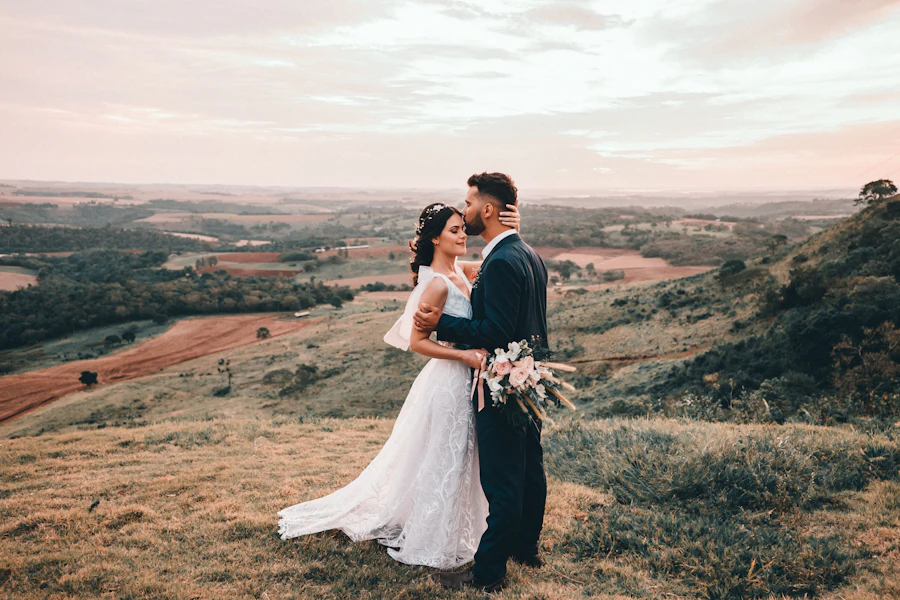


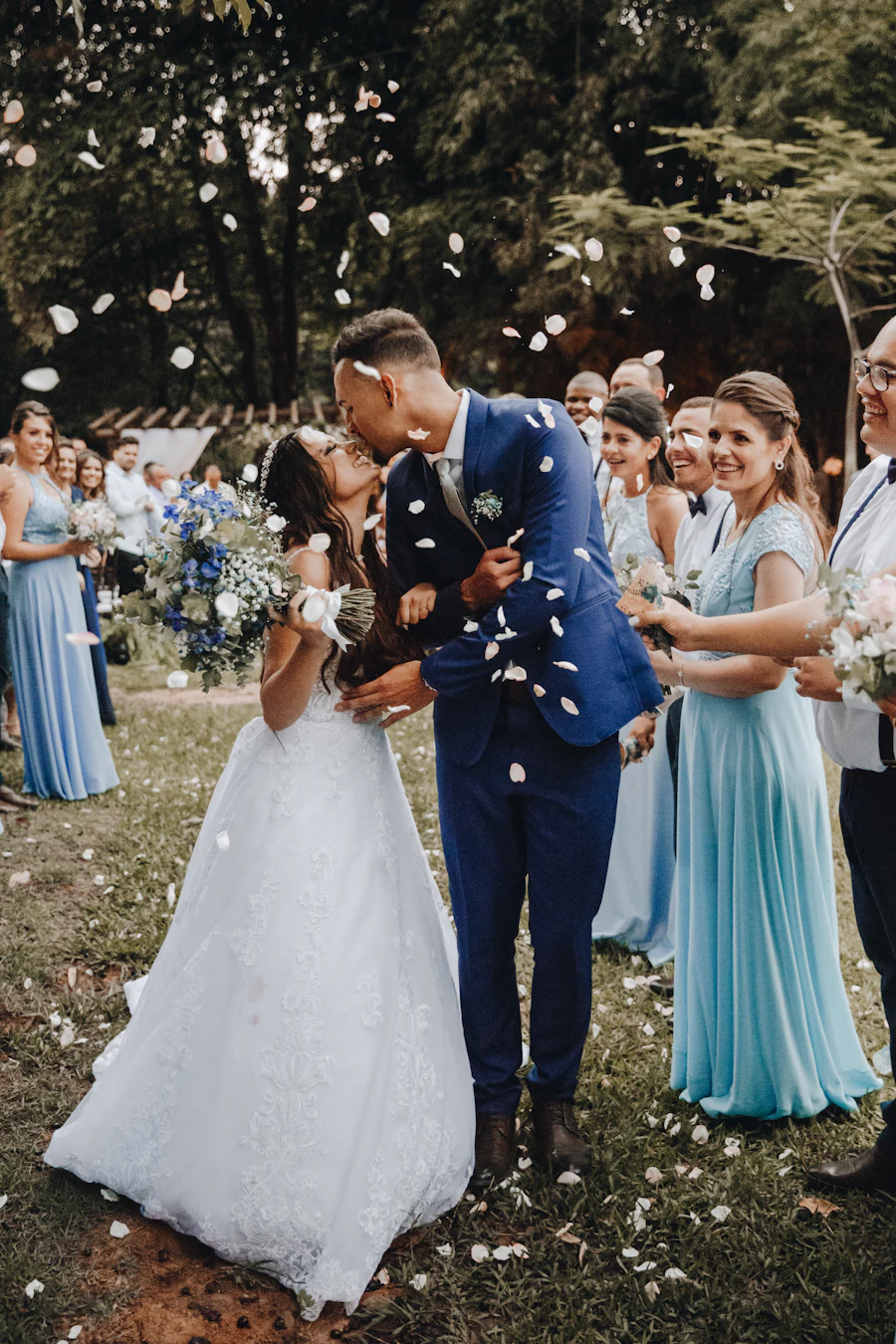


We also plan Christian weddings (church ceremony and reception, Anglo-Indian and community-specific traditions), Bihari weddings (Tilak, Mehndi, Haldi, Shaadi, Bidaai), and Jain weddings (Vinayak Sthapana, Lagna Lekhan, full ritual sequence with Jain food restrictions). If your community isn't listed — ask us. The list is what we have planned. It isn't the limit.
Marwari wedding ritual sequence
A Marwari wedding traditionally flows: Roka & Sagai → Tilak → Ganpati Sthapana & Mehndi → Sangeet → Pithi Dastoor → Baraat, Toran & Pheras → Vidaai and Reception.
- Roka & Sagai (Months before): The families say yes. Rings exchanged, sweets distributed, dates fixed — the formal start of everything that follows.
- Tilak (Weeks before): The bride's family travels to the groom's home and anoints his forehead — acceptance, formalised, before a single vendor is booked for the week itself.
- Ganpati Sthapana & Mehndi (Two to three days before): Ganeshji is installed to clear the path of obstacles — and the bride's hands turn intricate with henna over an afternoon of music.
- Sangeet (Night before Pithi): The biggest night before the wedding — choreographed performances, a proper stage, full F&B, and both families competing in joy.
- Pithi Dastoor (A day before): The Marwari haldi — turmeric and sandalwood applied to bride and groom in their own homes, in yellow everything.
- Baraat, Toran & Pheras (Wedding day): The groom arrives on horseback, strikes the toran at the door — and the pheras around the fire follow at the exact auspicious hour.
- Vidaai & Reception (Wedding night & after): The farewell — and then the welcome, as the new family hosts the grandest dinner of the week.
Punjabi wedding ritual sequence
A Punjabi wedding traditionally flows: Roka → Sagai & Chunni → Mehndi → Sangeet & Jaggo → Choora → Baraat, Milni & Pheras (or the Anand Karaj for Sikh families) → Doli and Reception.
- Roka (Months before): The first yes. Both families meet, blessings and shagun are exchanged, and the couple is officially spoken for.
- Sagai & Chunni (Weeks before): The engagement — rings exchanged, and the groom's mother drapes the bride in a chunni, welcoming her into the family.
- Mehndi (Two days before): Henna, folk songs and an afternoon that smells of attar — the bride's side gathers, and the celebration truly begins.
- Sangeet & Jaggo (Night before): The loudest night of the week — dhol, boliyan, decorated gaagar pots carried on heads, and dancing that only ends because the wedding is tomorrow.
- Choora (Wedding morning): The bride's maternal uncle slips the red and ivory bangles onto her wrists — kalire tied, tears guaranteed.
- Baraat, Milni & the Ceremony (Wedding day): The groom arrives with a brass band; the families embrace in milni; then pheras around the fire — or the Anand Karaj at the gurdwara for Sikh families.
- Doli & Reception (Wedding night & after): The farewell as the bride leaves her parents' home — and the reception that welcomes her into the next one.
South Indian wedding ritual sequence
A South Indian (Tamil-style) wedding traditionally flows: Nichayathartham → Pandha Kaal Muhurtham → Sumangali Prarthanai → Janavasam → Kashi Yatra & Oonjal → Muhurtham (Kanyadaanam, the Thaali, Saptapadi) → Reception.
- Nichayathartham (Months before): The engagement. Horoscopes matched, the muhurtham fixed, plates of fruit and silk exchanged before the deity.
- Pandha Kaal Muhurtham (Days before): The auspicious bamboo pole is raised at the venue — the formal, blessed start of the wedding preparations.
- Sumangali Prarthanai (A day before): The married women of the family are honoured and fed — their blessings sought for the bride's long, happy marriage.
- Janavasam (Wedding eve): The groom is received in procession — traditionally through the streets — and welcomed into the wedding hall.
- Kashi Yatra & Oonjal (Wedding morning): The groom 'leaves for Kashi', renouncing the world — until the bride's father wins him back. Then the couple swings on the oonjal as the women sing.
- Muhurtham (The muhurtham hour): Kanyadaanam, the thaali tied in three knots, saptapadi around the fire — the wedding itself, at the exact auspicious minute.
- Reception (Evening or next day): The evening celebration — silk, jasmine, nadaswaram giving way to a modern stage and dinner.
Telugu, Kannada and Malayalee weddings follow their own beautiful variations — each is planned in its own correct sequence.
Muslim wedding ritual sequence
A Muslim wedding traditionally flows: Mangni → Mehndi → Nikah (the Ijab-o-Qubool and Mehr, witnessed before the Qazi) → Rukhsati → Walima.
- Mangni (Months before): The engagement — rings and gifts exchanged between families, the match formally announced.
- Mehndi (A day or two before): Henna for the bride, music and mithai for everyone — an evening of colour before the solemnity of the Nikah.
- Nikah (Wedding day): The heart of it: the Ijab-o-Qubool — offer and acceptance — the Mehr settled, the Nikahnama signed before the Qazi and witnesses.
- Rukhsati (After the Nikah): The bride's farewell from her parents' home — the Quran held above her head as she leaves.
- Walima (A day after): The groom's family's celebration feast — the public announcement of the marriage, and the grandest meal of the week.
Full halal hospitality coordination — catering, timings around namaz, and family seating — is planned as part of every function.
Inter-Community wedding ritual sequence
An inter-community wedding with Purple Crown Events runs both families' rituals in full — two complete sequences, honoured in order, never folded into a compromise.
- Two sequences, not a blend (The principle): Both traditions are planned in full — separate ceremonies where needed, sequenced so neither side's rituals are trimmed to fit the other's.
- Two officiants, both briefed (The coordination): Pandit, priest, Qazi or granthi — each officiant coordinated, and each family briefed on what happens, and when, in the other's tradition.
- Food both sides recognise (The detail): Menus designed so both families taste home — like the fully Bengali wedding menu we ran beside South Indian dishes for Riya and Karthik.
- The worked example (A real wedding, below): Riya & Karthik: the full Bengali sequence first — Shubho Drishti, Sindoor Daan — a half-hour pause, an outfit change, then the complete Tamil ceremony. Two ceremonies, one day, zero compromise.
Bengali and South Indian. Marwari and Punjabi. Hindu and Muslim. When two traditions are coming together, both are planned in full.
What Full Planning Includes
Everything that goes into the wedding. Done by us.
Eight things every Full Planning wedding includes. The scale changes between a ₹5 lakh wedding and a ₹30 lakh wedding. The list doesn't.
Full wedding planning with Purple Crown Events includes eight things: concept and design, vendor sourcing and management, budget structuring, multi-day timeline planning, ritual coordination, guest management, on-day execution, and post-event closure.

Concept and design
The vision for each function — colour palette, mood, flow — built around your family, not pulled from a folder of past events.
Vendor sourcing and management
Decorators, caterers, photographers, makeup artists, priests, transport, lighting, sound, entertainment — we source, vet, negotiate, and manage every one of them.
Budget structuring
A detailed budget you can actually read — your planning fee shown separately from your event budget, every cost grouped clearly, nothing buried. One clear event budget, agreed upfront — no surprise line items later.
Multi-day timeline planning
Every function sequenced across days in your tradition's correct order, locked to the minute, shared with every vendor in advance.
Ritual and tradition coordination
Pandit liaison, ritual sequence planning, briefing the families on what happens and when — especially when two communities are coming together.
Guest management
Invitations, hospitality, transport, accommodation for outstation guests, on-day coordination — handled by us.
On-day execution
Our team is on the ground from setup to closing, managing every vendor, every transition, every moment. You and your family are guests.
Post-event closure
Final settlements with all vendors, return of rentals, the cleanup. The wedding ends when we say it ends — not when you have to start chasing payments.
Two Ways To Work With Us
Pricing, in full.
Planning fees only. These are separate from the event budget — the actual cost of vendors, venue, food, and everything else that goes into the wedding itself.
A wedding planner in Kolkata typically doesn't publish fees — Purple Crown Events does: Full Planning is 12% of the event budget, from ₹50,000 up to ₹1,50,000, and Partial Planning is 12% from ₹30,000 up to ₹1,00,000.
Full Planning
From ₹50,000 — 12% of your event budget, up to a maximum planning fee of ₹1,50,000.
We plan and execute the entire wedding — every function, every vendor, every detail, from concept to closing. Engaged 4–12 months out.
Partial Planning
From ₹30,000 — 12% of your event budget, up to ₹1,00,000.
For families who want us to plan specific functions only — for example, just the Sangeet, or just the wedding day. Same standard, same team — a defined slice of the wedding rather than the whole.
All planning fees are exclusive of GST.
Most planners in Kolkata don't publish their fees. We do. The fee is what you pay us for the planning, the coordination, and the execution — the work. The event budget is everything else: vendor costs, venue, food, décor, photography, and so on. Those are billed as one agreed event budget, fixed before we start — the number you approve is the number you pay.
A Real Wedding
Riya and Karthik.
Five days. Three venues. Two traditions. And one Sangeet that almost happened somewhere else.
IChapter One
The Setup
Her family from Salt Lake. His from Bangalore — flying in for a Bengali wedding, which neither side of the family had ever attended each other's style of. Five days, three venues, close to three hundred guests on the wedding day. We had four months to plan it.
The brief from Riya's father was simple. “His family is coming all the way to Kolkata. Make them feel the Bengali in everything.”
We started with the food. Every meal across the five days had at least one Bengali dessert. The wedding day menu was fully Bengali. Even the in-between teas had a touch of it — mishti, shondesh, kheer. None of it announced itself. It just arrived, alongside the South Indian and North Indian dishes the rest of the menu carried.
Guests stayed at Taj Vivanta. Mehendi and Haldi happened there. The wedding ceremony was at Raajkutir in Swabhumi.

IIChapter Two
The Twist

The Sangeet was booked at a banquet hall. Thirty-six hours before the function, Riya's father called. He wanted to upgrade it to a cruise on the Ganges instead. The Ganges Queen. The event was on Sunday. He was calling on Friday night.
You don't say no to that conversation. You say yes and then you don't sleep.
The LED stage configuration we'd planned for a flat banquet floor had to be recalculated for a moving deck. The DJ rig, the lighting plan, the dancers' entries — all of it had to fit a space that was a fraction of the original, on water, with no walls. Guest transport had to be rerouted to a jetty. Catering had to be re-coordinated with cruise operations. The décor, which wasn't even ours originally, we took on too — there wasn't time to onboard anyone new. Fairy lights, drapes, the stage backdrop, all sourced and installed inside thirty-six hours.
By Sunday evening, the guests were boarding the Ganges Queen. Music carrying across the water. Riya's father stood on the deck looking like he'd planned it that way from the start.
IIIChapter Three
The Wedding
The wedding the next day was structured as two ceremonies, back to back. The Bengali rituals came first — Riya entered in her red Banarasi, sat through Shubho Drishti, Sindoor Daan, the full sequence. Then a planned half-hour pause. Outfit change. She entered again in her South Indian look, Karthik in his, and the Tamil ceremony began. Two ceremonies, one wedding day, both families seeing their traditions fully — not folded into a compromise.

A few days after the event, Riya sent us a review:
“I had the pleasure of working with Abeer from Purple Crown Events for my wedding, and I couldn't be happier with the experience. Abeer and his team did a phenomenal job with every detail. The anchor, the dancers, the lighting, the sound — everything came together exactly the way it should have. The coordination was seamless, and Abeer made sure every moment was perfect. The Sangeet was a huge success — everyone loved the performances and the vibrant energy of the evening. When it came to the wedding, Abeer exceeded all expectations once again. I highly recommend Purple Crown Events for anyone planning a celebration that matters.”
— Riya
A celebration that matters. That's the part we kept thinking about.
Destination Weddings
Weddings outside Kolkata.
Some families want the wedding closer to home — but the location they call home is somewhere else. Others want the wedding away from everything — a hill, a beach, a quieter city. We plan destination weddings across India, with our base of operations in Kolkata and travel built into the planning.
The most common destinations our clients ask about are within driving distance of Kolkata — Mandarmani for beach weddings, Darjeeling and Siliguri for the hills, Sikkim for the mountains. Further destinations — Goa, Rajasthan, Kerala — we plan too, with longer lead times and on-ground coordination.
The model is the same as a Kolkata wedding. Planning fees on the same scale. Travel and accommodation costs for our team are added as a clear line in your budget, agreed before we begin.
Purple Crown Events plans destination weddings from its Kolkata base — Mandarmani, Darjeeling, Siliguri and Sikkim within driving distance, plus Goa, Rajasthan and Kerala further afield — with the same published fee structure and team travel costs added transparently to the budget.


More From Our Recent Weddings
Recent weddings, across every tradition.
From weddings we've planned across Kolkata — across communities, across budgets. The full portfolio lives a click away.


Why Couples Choose Us
Four things that aren't industry standard in Kolkata.
Transparent planning fees, published.
Most wedding planners in Kolkata won't tell you their fees until you're three meetings in. Ours are above. Whatever the wedding, the fee structure is the same — and the event budget is one number, agreed upfront, before we start.
Every tradition, fully planned.
Bengali, Marwari, Punjabi, Muslim, South Indian, Christian, Bihari, Jain, inter-community. The planning depth is the same for every one of them — never a template, never a copy-paste.
One team, from first call to final payment.
The people who plan your wedding are the people running it on the day — not a day-of coordinator you meet for the first time that morning. One team holds every thread, start to finish.
Built for Kolkata, not Googled the night before.
Four years of vendor relationships across the city. Venue managers we know personally. Decorators, caterers, photographers, lighting teams we've worked with on 40+ events. You're getting a planner with Kolkata in their phone book, not in their browser history.
Frequently Asked
Things couples and parents ask before booking.
For Full Wedding Planning, our planning fee is 12% of the event budget, starting at ₹50,000 and capped at ₹1,50,000. For Partial Planning, it's 12% starting at ₹30,000, capped at ₹1,00,000. These are planning fees only, exclusive of GST. They cover our work — concept, vendor sourcing, coordination, and execution. The actual cost of vendors, venue, food, and décor is the event budget, billed separately.
For Full Planning, anywhere from 4 to 12 months out — though 8–12 gives you the best vendor selection, since the strongest vendors in Kolkata book out 6–9 months ahead. For Partial Planning or single-function planning, 3–4 months is workable. For destination weddings outside Kolkata, start at least 10–12 months early.
Eight things — concept and design, vendor sourcing and management, budget structuring, multi-day timeline planning, ritual coordination, guest management, on-day execution, and post-event closure. Everything from the first conversation to the final vendor payment. The full breakdown is above on this page.
Marwari weddings are multi-day affairs — Roka, Tilak, Mehndi, Sangeet, Pithi Dastoor, the wedding ceremony, and the reception, often spread over four to seven days. We work with Marwari families in Kolkata regularly, source pandits familiar with Marwari ritual sequences, coordinate the food — pure vegetarian, often Jain-friendly — and plan the décor in line with traditional colour palettes. Every function is planned individually, but the week is built as one connected celebration.
If your wedding is small, single-day, and entirely traditional with vendors your family has used before — probably not. You can do that with a list and a few phone calls. If your wedding is multi-day, multi-function, has 100+ guests, involves vendors you haven't worked with before, or involves two traditions coming together — a planner saves you not just time but money, by sourcing better vendors at better rates and preventing the small mistakes that snowball and push most wedding budgets well over what the family first planned for.
Yes. We plan destination weddings within driving distance of Kolkata — Mandarmani, Darjeeling, Siliguri, Sikkim — as well as further afield like Goa, Rajasthan, and Kerala. The lead time is longer and the planning fee scale is the same. Travel and accommodation for our team are added as a clear line in the event budget, agreed before we begin.
This is one of the things we're built for. When two communities are coming together — Bengali and South Indian, Marwari and Punjabi, Hindu and Muslim — the wedding has to honour both sides fully, not fold them into a compromise. We plan the rituals in full sequence for both traditions, brief both families on what happens and when, coordinate priests or officiants for each, and design the food and décor so both sides see themselves in the celebration. Riya and Karthik's wedding above is a real example.
Something almost always does — a vendor runs late, the power flickers, a guest count jumps without notice. The difference is what happens next. Our team is on the ground from setup to closing, with replacements pre-identified for every vendor category before the day even starts. Most of these moments, the family never notices — and that's the point. You're meant to be present at your own wedding, not managing it.
Ready To Talk
Tell us what you're imagining.
No commitment, no pressure — just a conversation. WhatsApp, email, or a free 30-minute call.